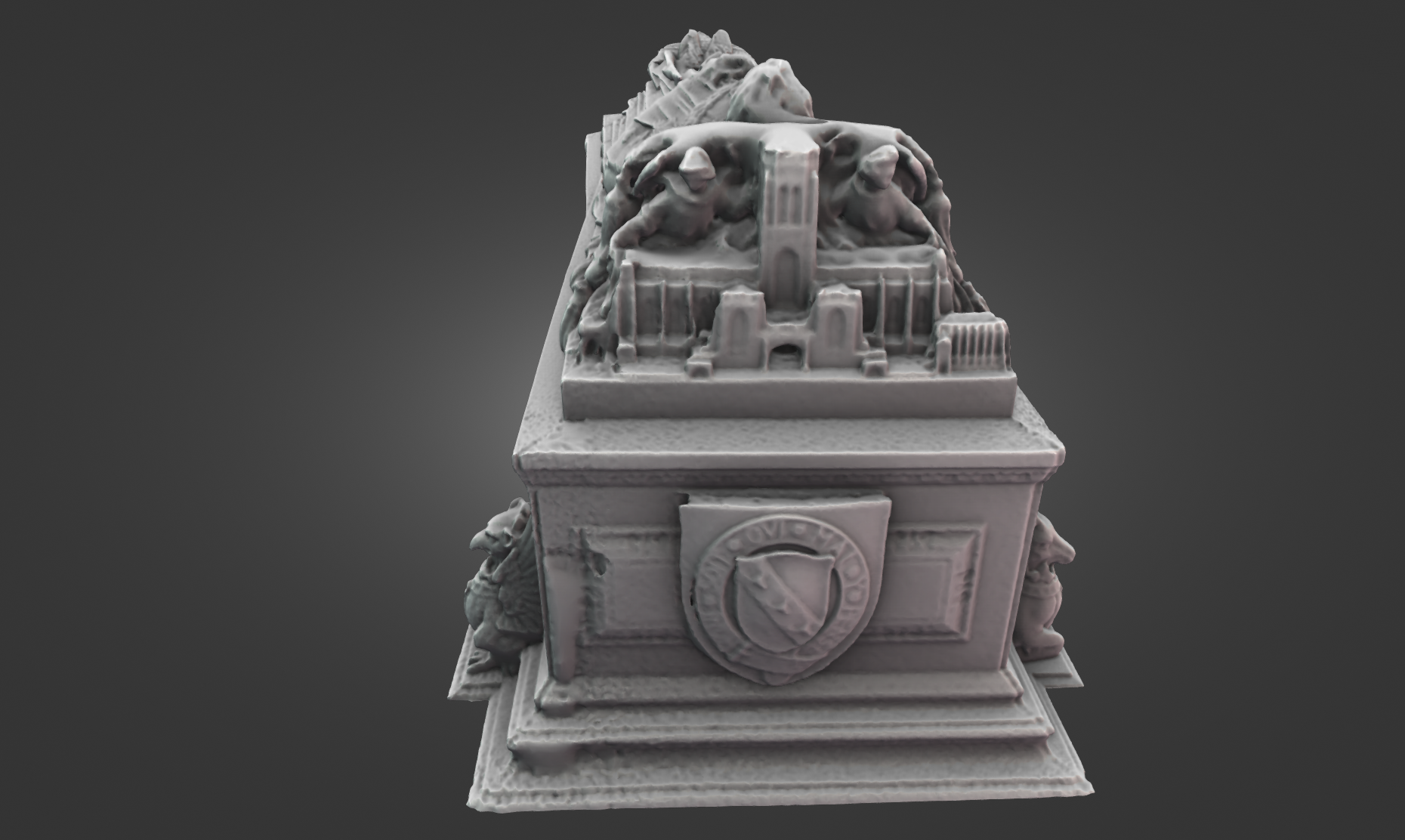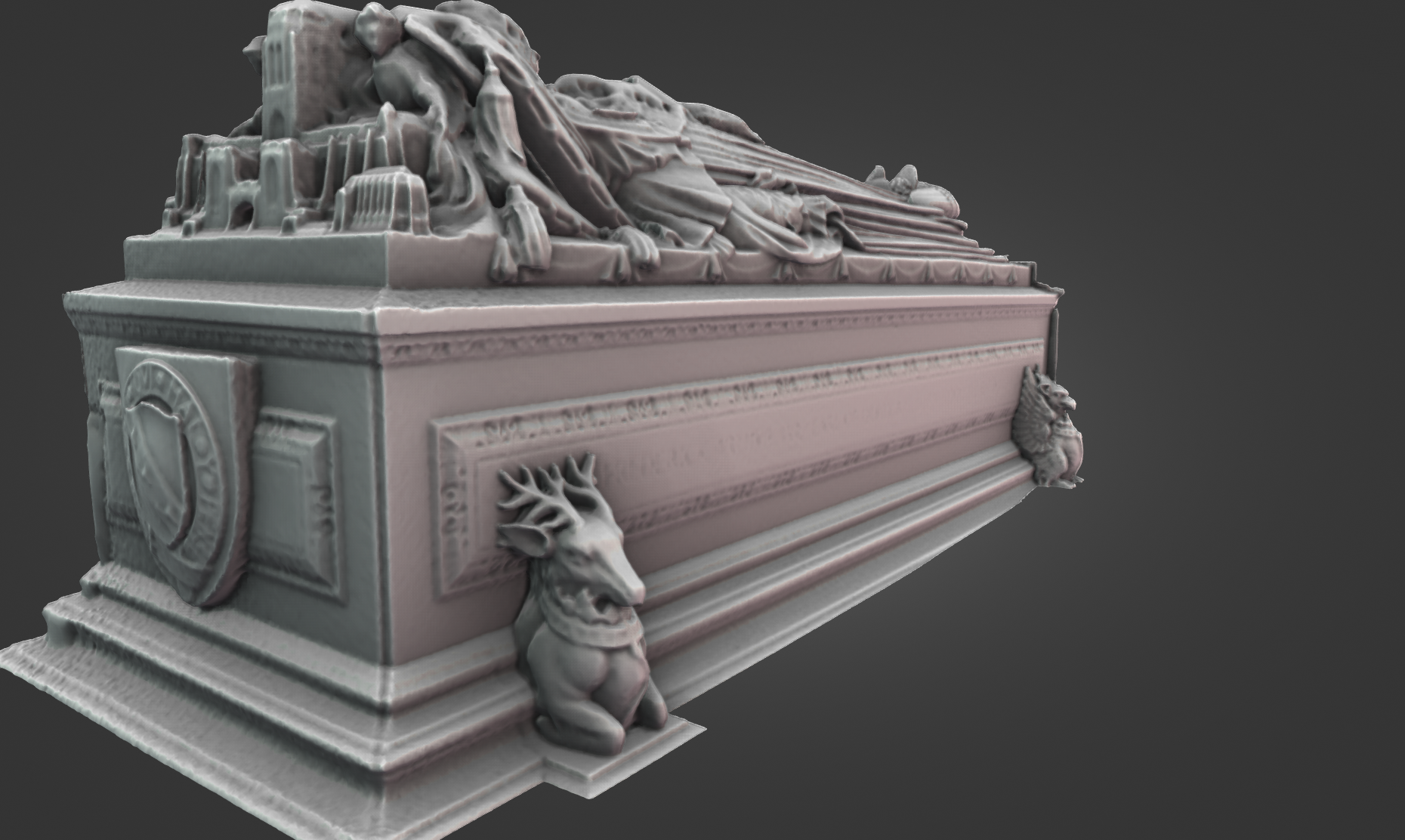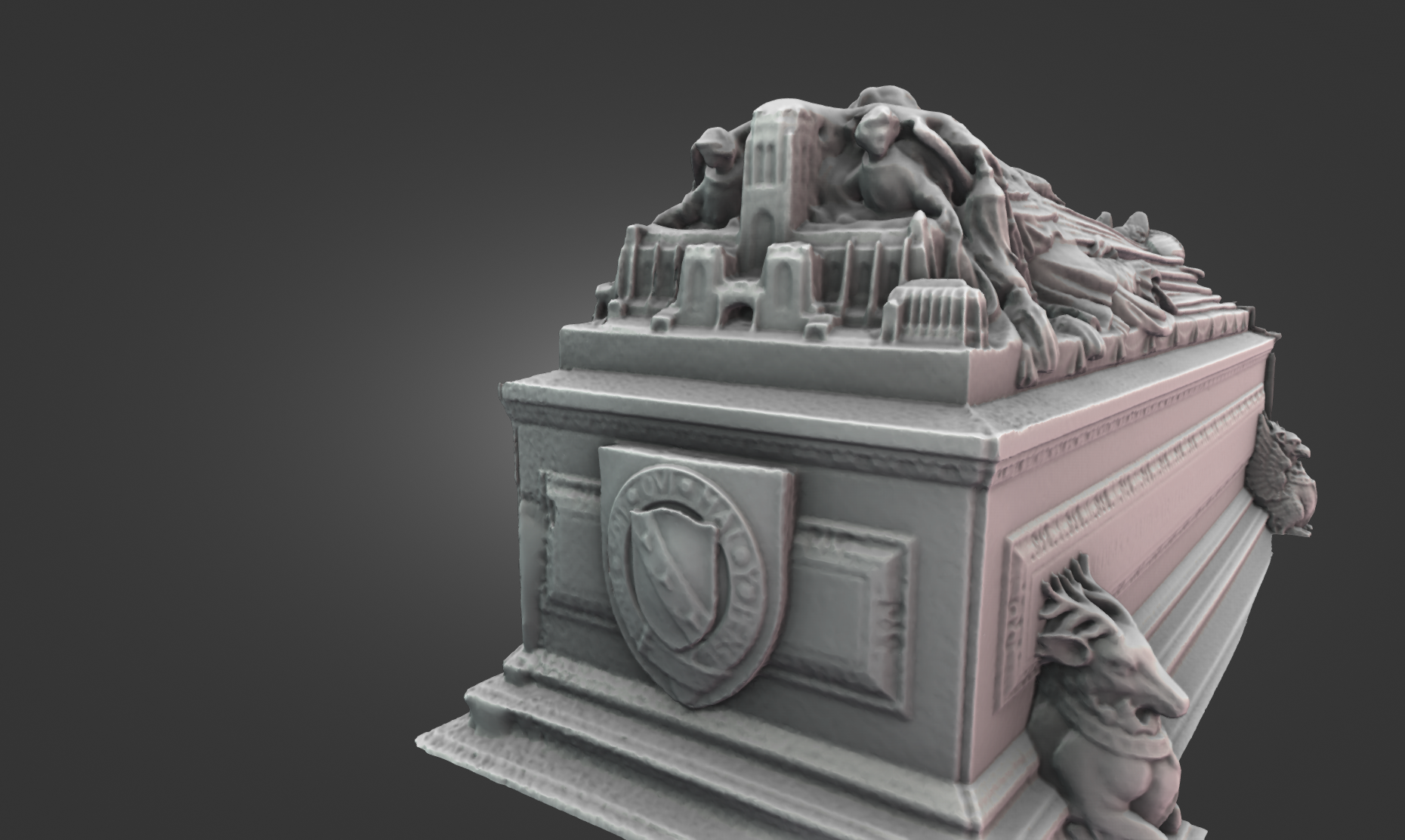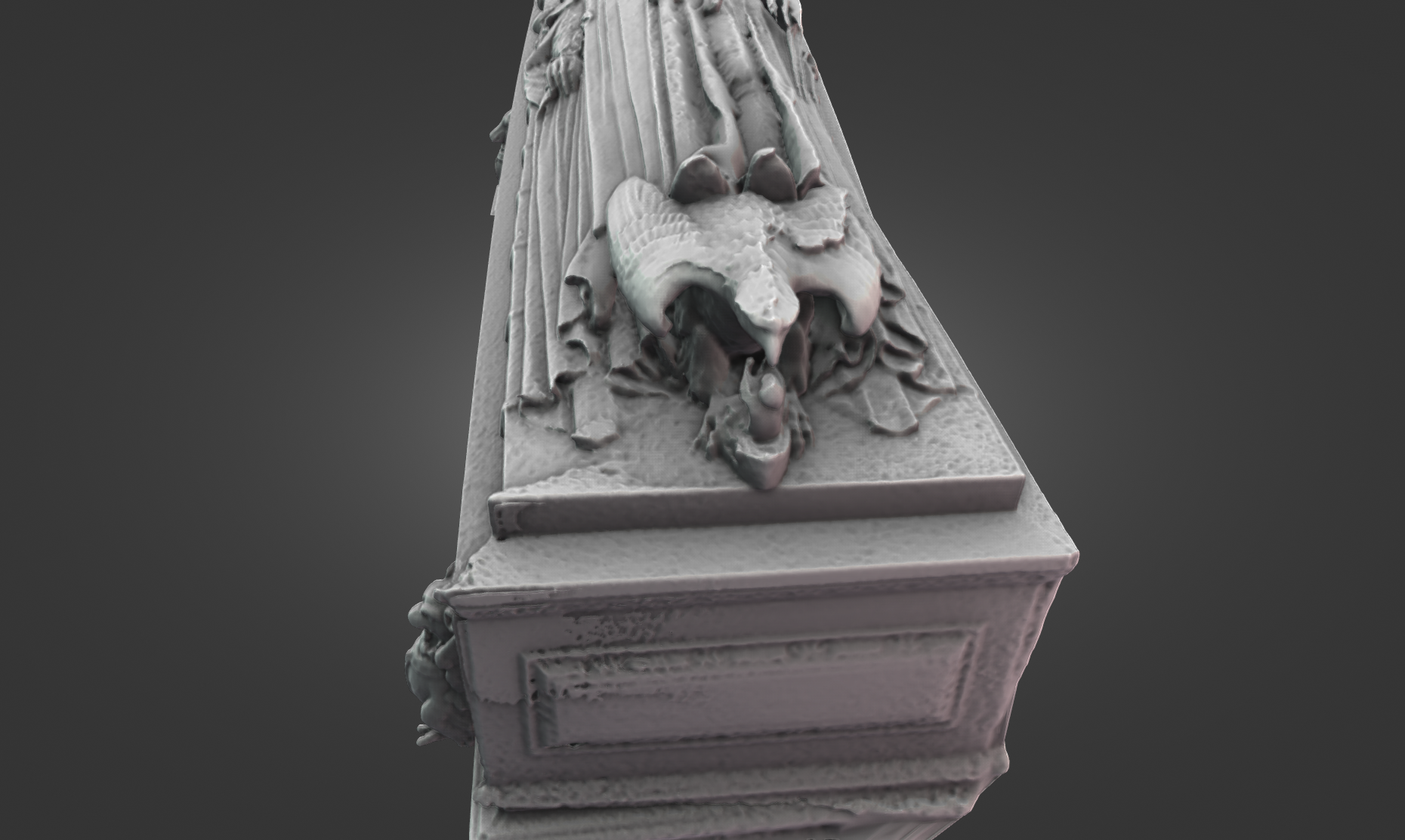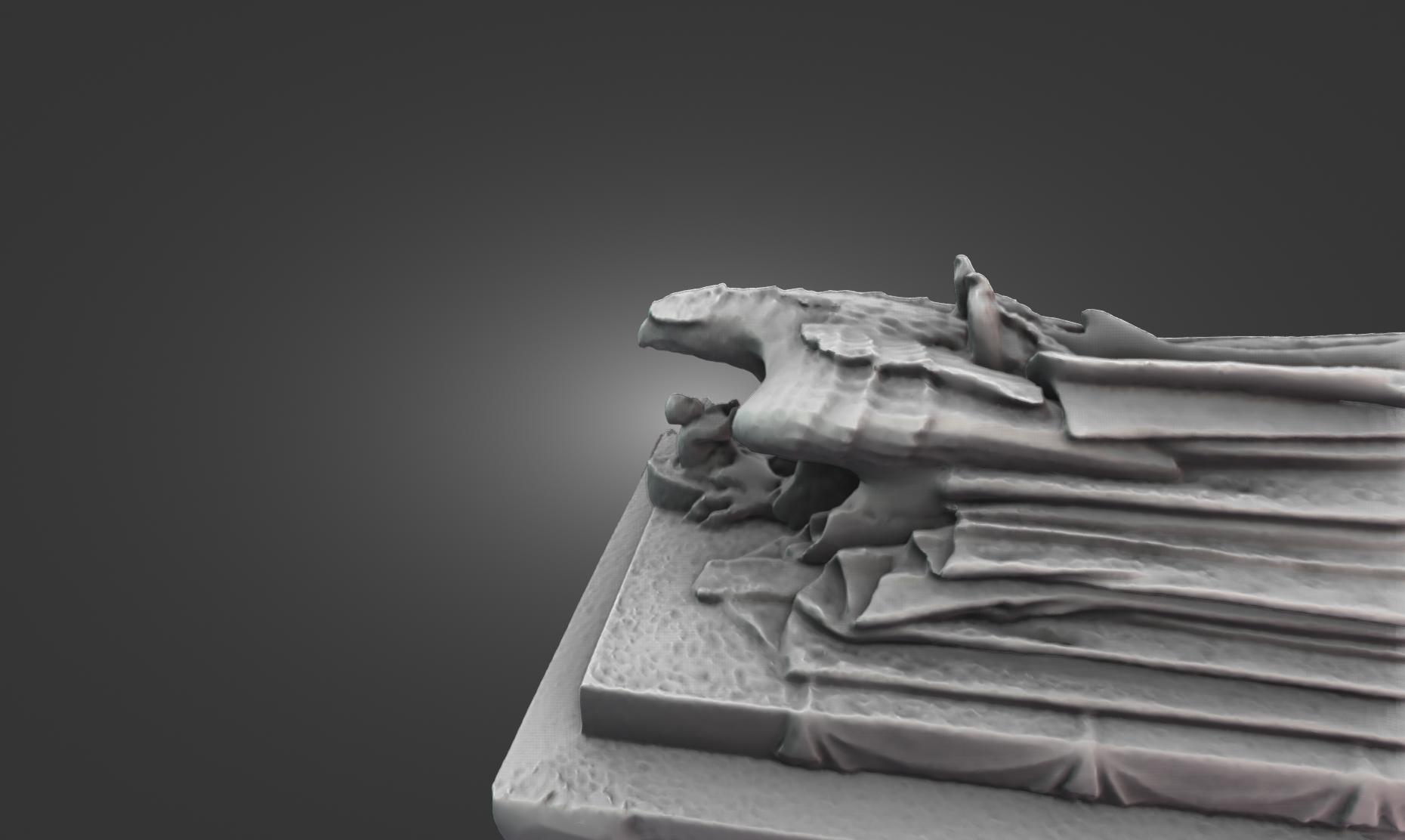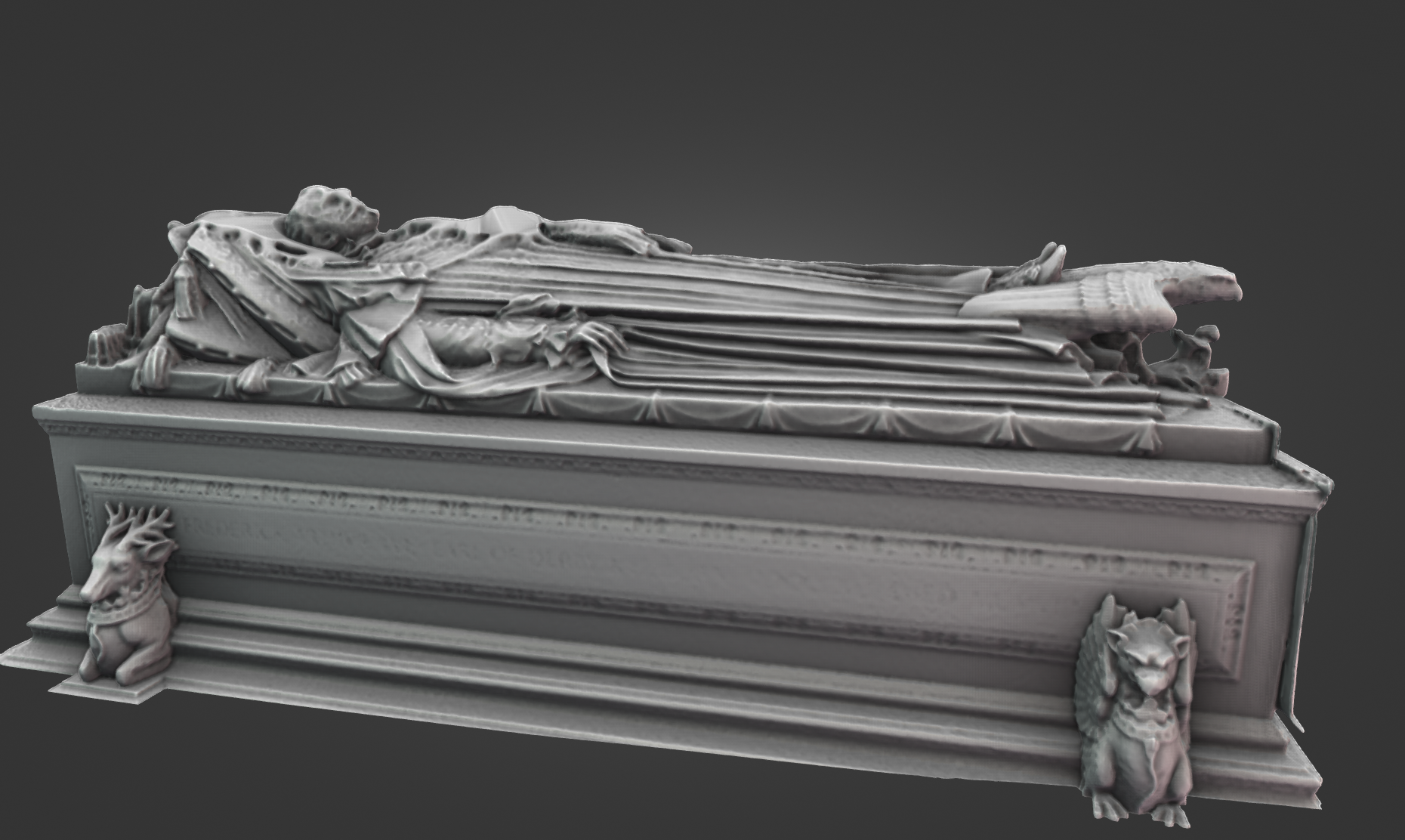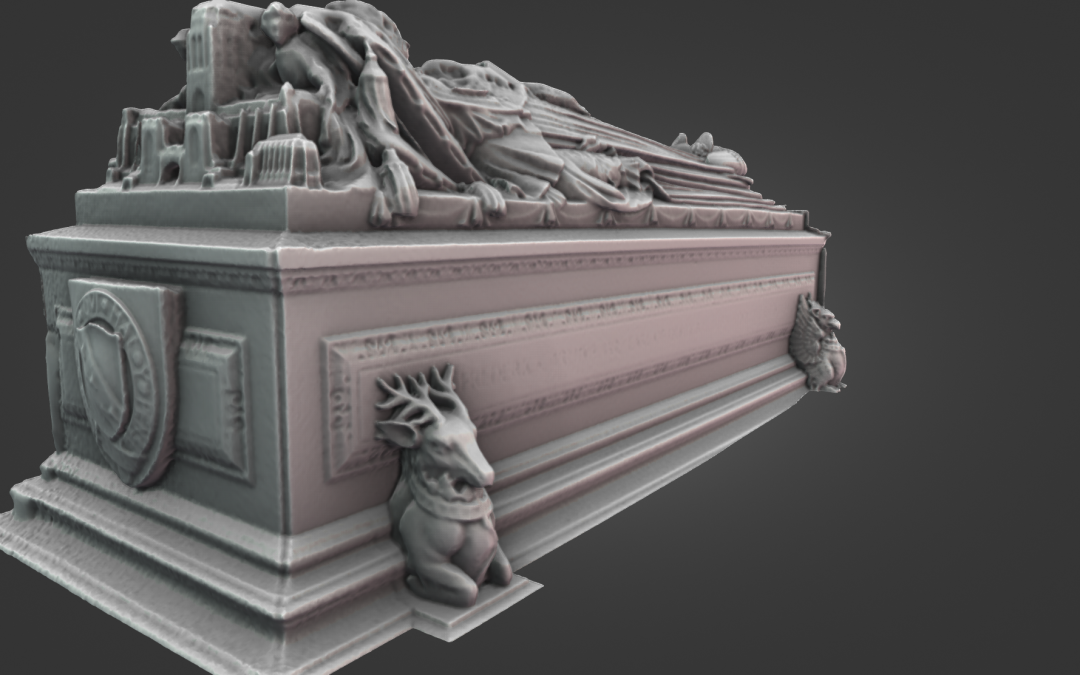
Scanned using the Creality Otter Lite
Frederick Arthur Stanley, the 16th Earl of Derby, is a name that resonates far beyond the walls of the Liverpool Anglican Cathedral. He was a pillar of the local community, but his influence reached across the Atlantic to the ice rinks of North America. By creating a high resolution 3D digital twin of his final resting place, we can explore the intricate details of a man who helped shape the world as we know it.
A Global Legacy: From Liverpool to the Stanley Cup
Frederick Arthur Stanley, who lived from 1841 to 1908, was a central figure in the development of modern Liverpool. He served as the city's first Lord Mayor in 1895 and was the first Chancellor of the University of Liverpool. Perhaps most significantly for this location, he was the first President of the Cathedral Committee, providing the leadership and vision necessary to begin the construction of this massive landmark.
Outside of the United Kingdom, he is best known for his time as the Governor General of Canada. In 1892, he purchased a silver punch bowl to be awarded to the top amateur hockey team in the country. That bowl became the Stanley Cup, the most famous trophy in professional hockey.
Symbolism in Bronze: The Eagle Child and Heraldic Beasts
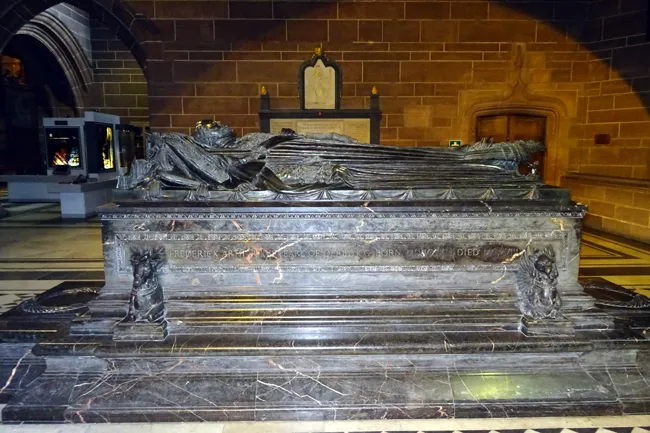
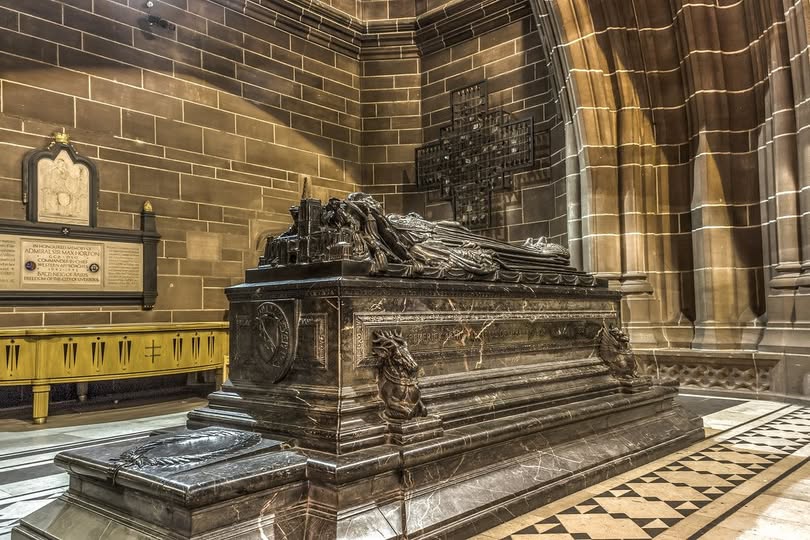
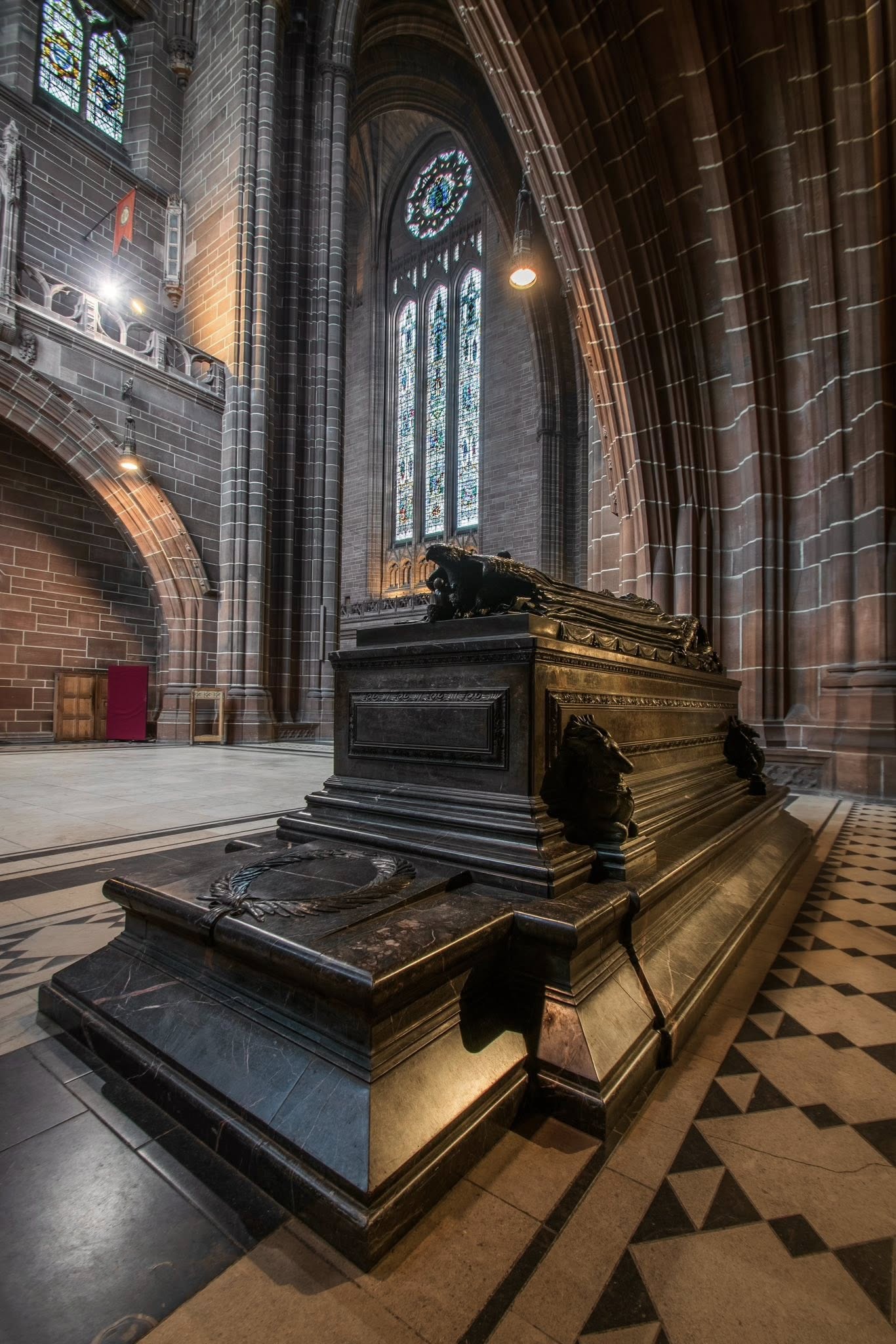
The monument was designed by the cathedral architect, Sir Giles Gilbert Scott, and executed by the sculptor Leonard Stanford Merrifield in the late 1920s. Every detail in the bronze work tells a story of the Earl’s life and family heritage.
- The Knightly Robes: The Earl is depicted in the ceremonial robes of a Knight of the Garter, the highest order of chivalry in the United Kingdom.
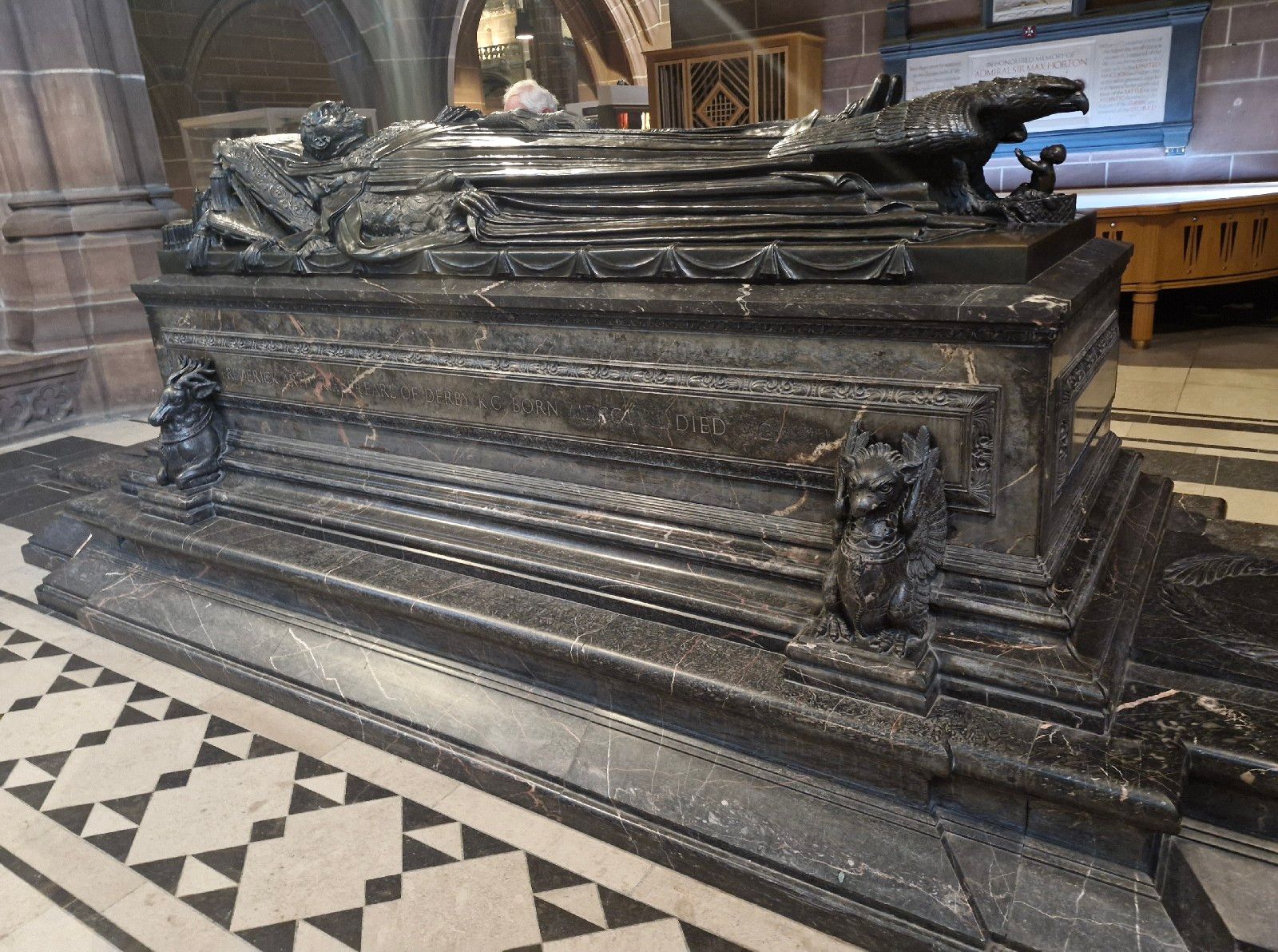
- The Eagle and Child: This legendary symbol of the Stanley family is featured on the monument. It refers to a 14th century legend of a baby found in an eagle nest and subsequently adopted by the family.
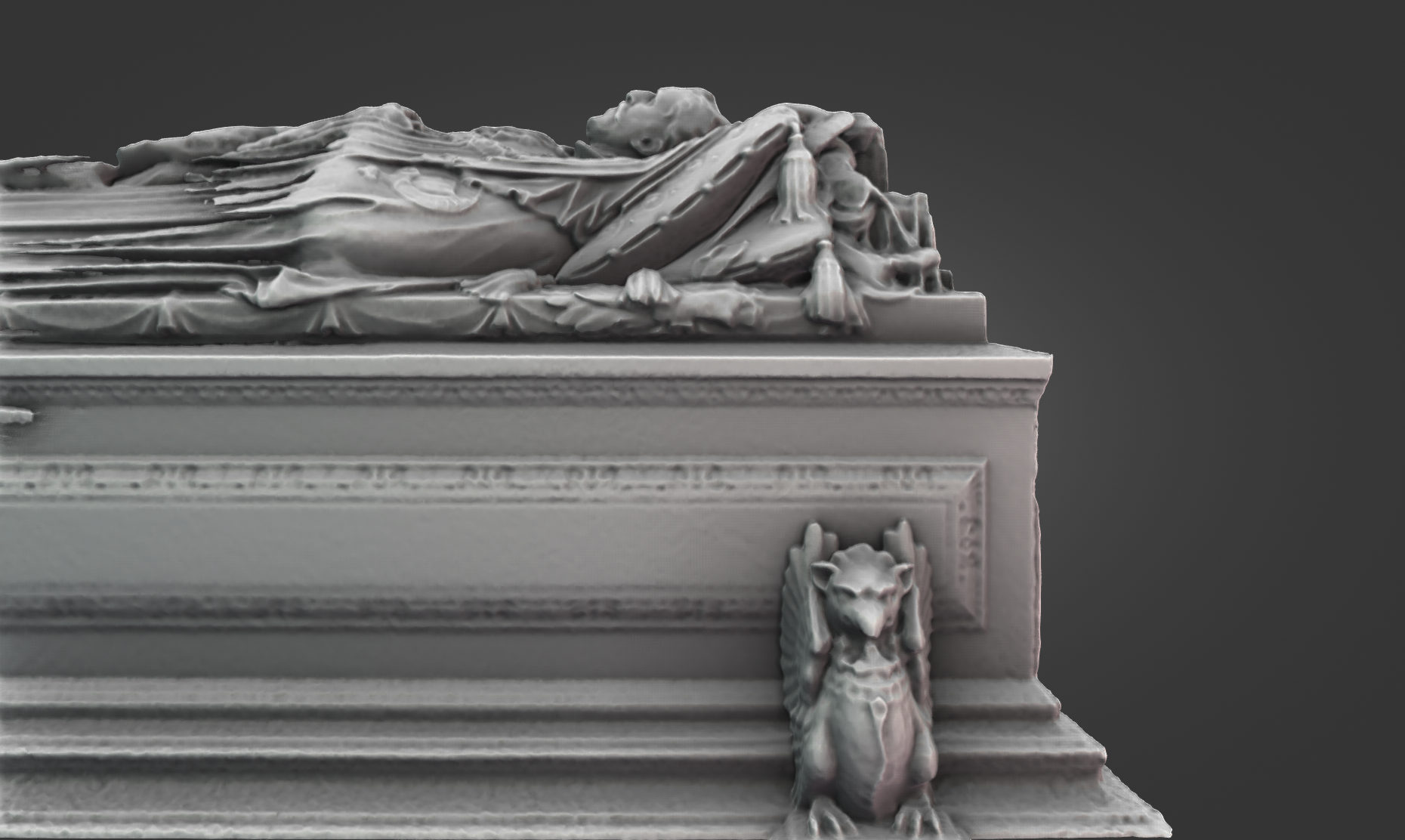
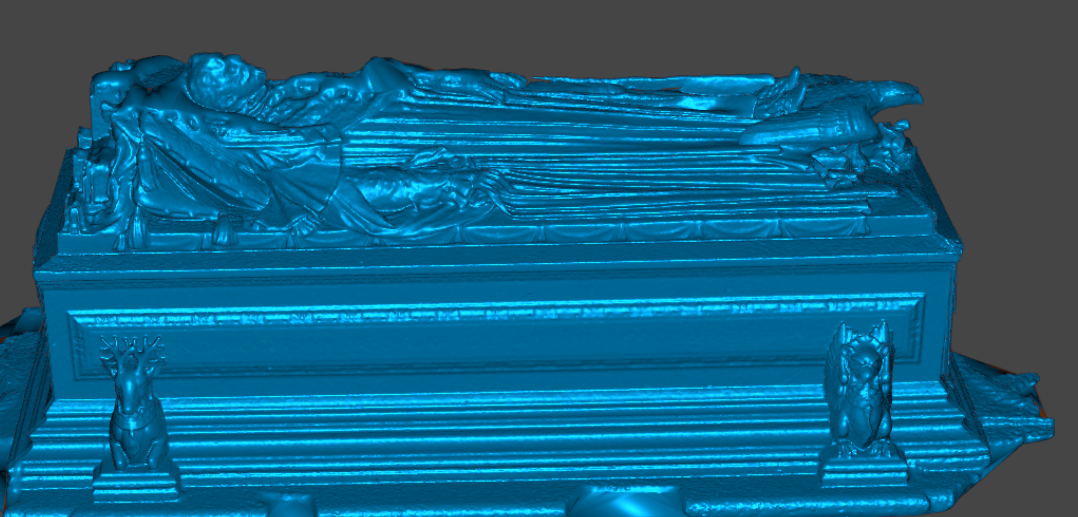
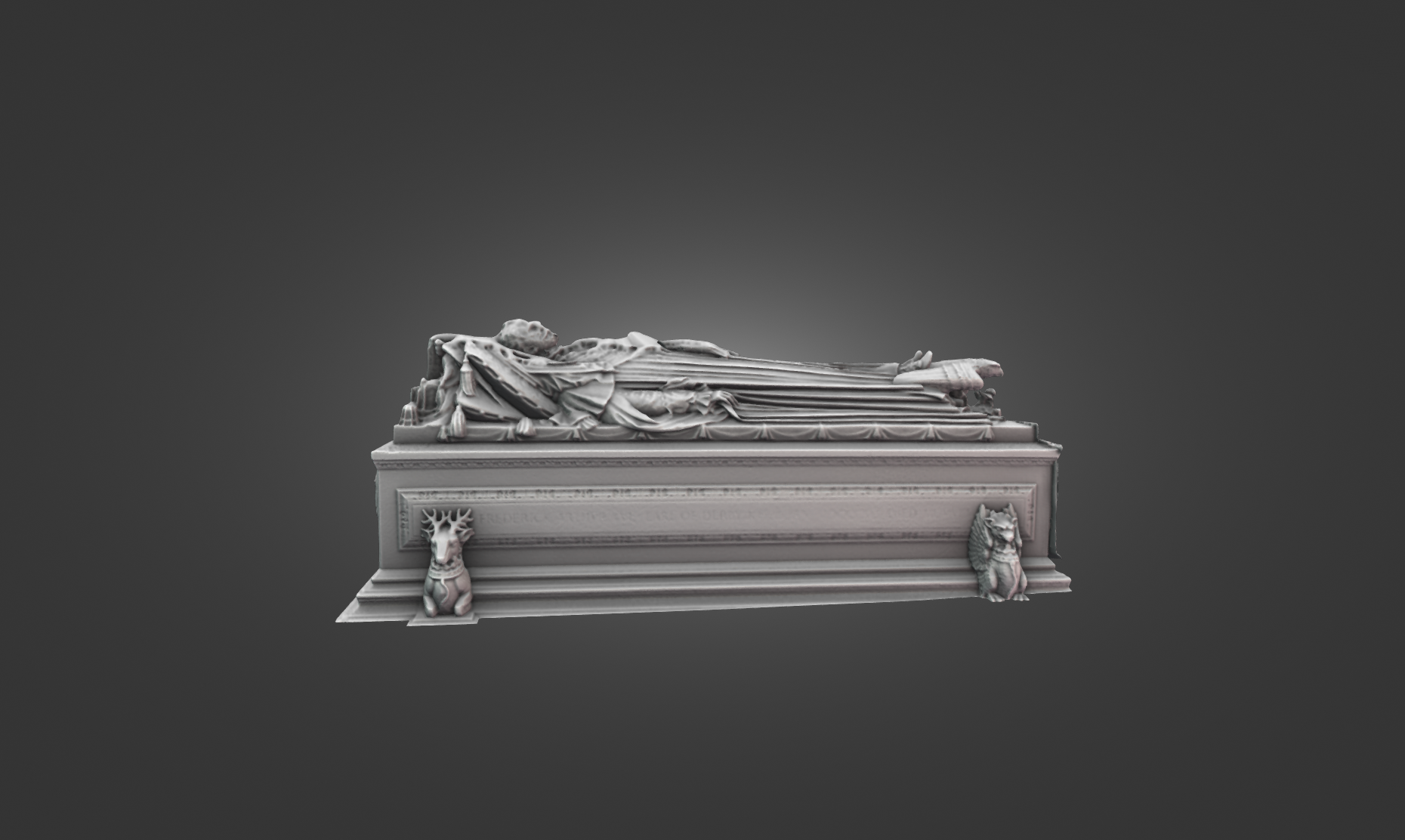
- The Heraldic Beasts: At the corners of the tomb are protectors from the family crests, including a Stag and a Griffin, representing strength and the family’s deep roots in the region.
Hidden Treasures: Finding the Scouse Mouse
The monument contains two fascinating features that are often missed by the casual observer but are captured beautifully in this 3D scan.
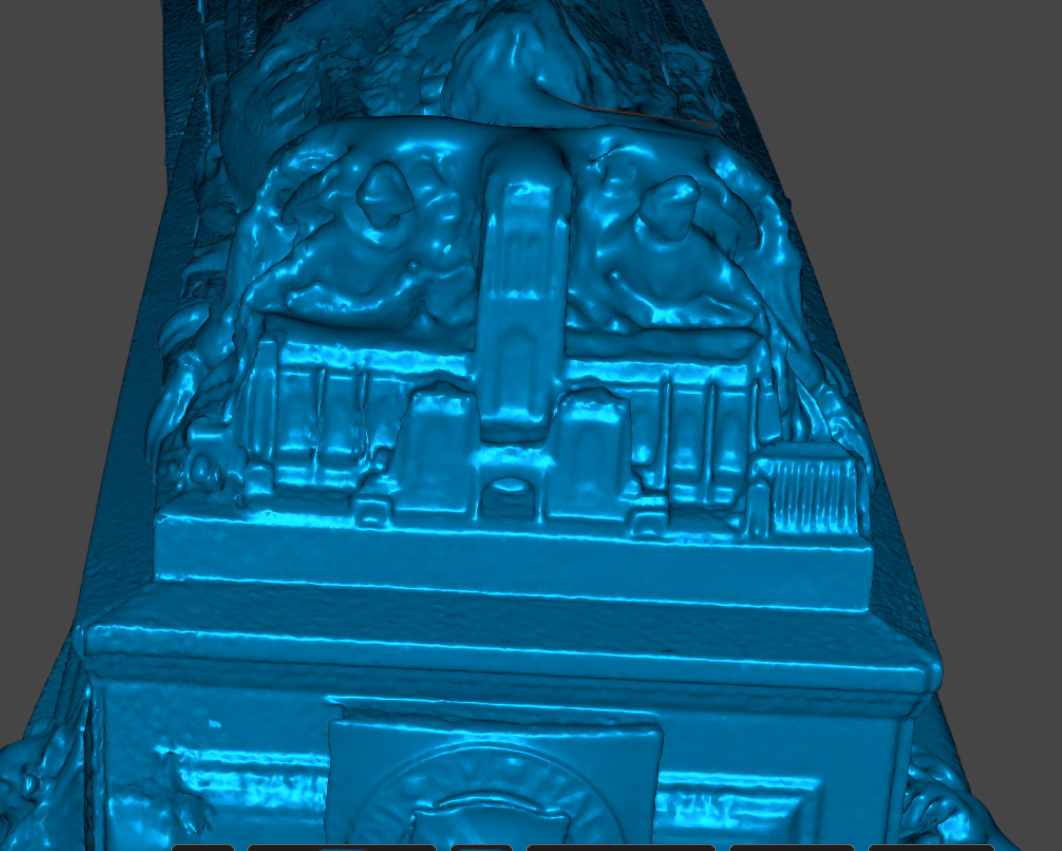
First, the Earl is shown cradling a miniature, high detail model of the Liverpool Cathedral in his hands. This represents his role as the founder who held the vision for the building from the very start.
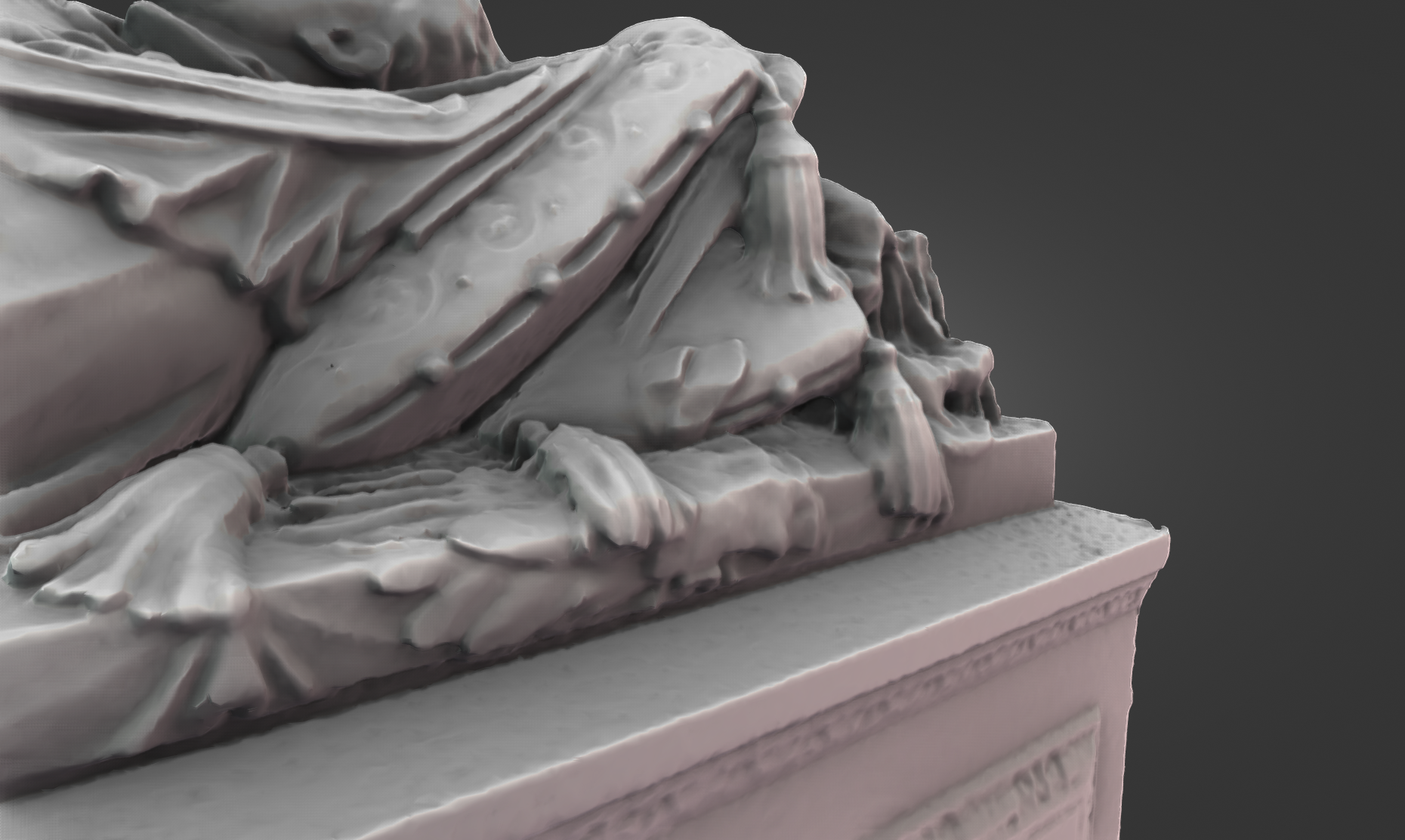
Second, there is the Scouse Mouse. Tucked behind one of the decorative bronze tassels on the left side of the tomb is a tiny mouse. Local tradition suggests it was added to show that even the smallest creatures are welcome within the cathedral walls, though some believe it served as a secret signature from the sculptor.
Preserving History with the Creality Otter 3D Scanner
Creating a digital twin of this monument allows for the preservation of these intricate details, from the shallow inscriptions on the side to the complex textures of the bronze robes. Capturing dark bronze can be a challenge, but the Creality Otter managed to resolve the deep shadows and metallic highlights without the need for scanning sprays.
This digital archive serves as a bridge between the Victorian era of Liverpool and the global sporting world we know today, ensuring the artistry of Leonard Stanford Merrifield and the legacy of Lord Stanley remain accessible to everyone