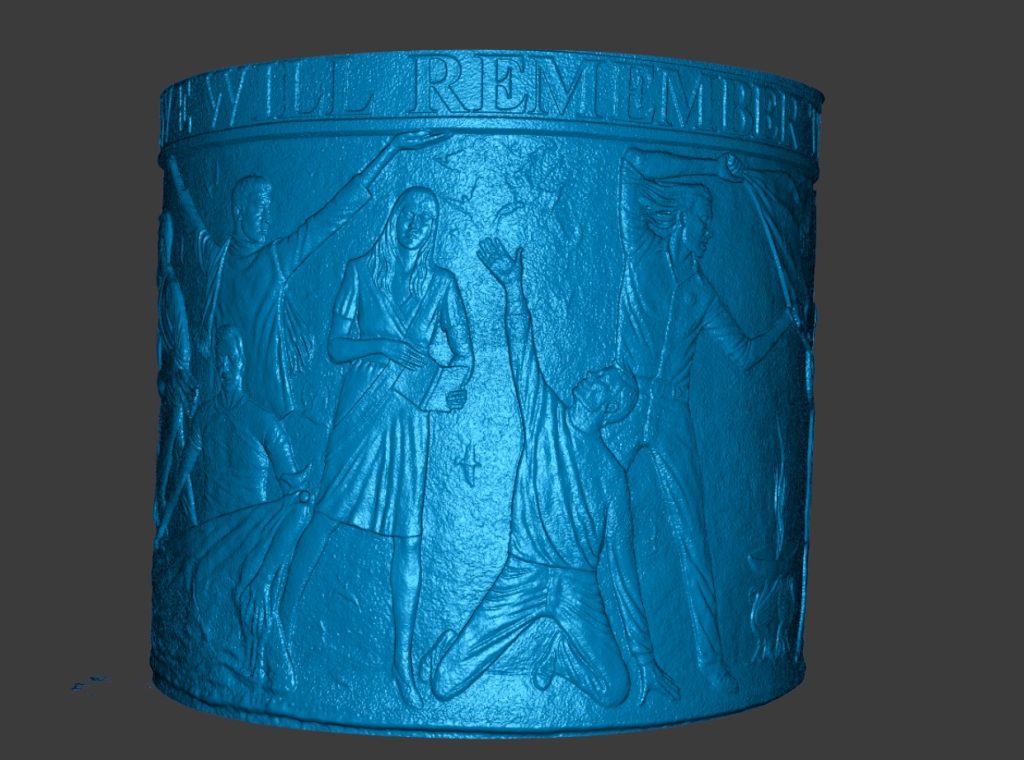
Walking through the Old Haymarket area in the heart of Liverpool city centre, you will find one of the most poignant and important tributes in the entire region. The Hillsborough Monument is a beautiful, deeply moving piece of public art dedicated to the victims of the 1989 tragedy. As part of my ongoing mission to digitally preserve our local heritage using the Creality Otter Lite 3D scanner, I knew capturing this specific memorial was an absolute must.
Here is the history behind this powerful city centre tribute and a look at how advanced 3D scanning technology makes recording its intricate details possible.
The Story Behind The Old Haymarket Monument
While many football fans are familiar with the memorial at Anfield, the monument in the city centre has a very special origin story. It stands as a testament to the unity and enduring spirit of the entire city.
Here are the most important facts about the sculpture:
- The Inspiration: The catalyst for the monument came from a young girl named Rosie. She asked her father why there was a memorial at the football ground but nothing in the city centre for everyone else to see.
- The Artist: Commissioned by the Hillsborough Justice Campaign, the memorial was crafted by the renowned Liverpool sculptor Tom Murphy and officially unveiled to the public in April 2013.
- The Design: The sculpture is a massive seven foot tall cylindrical bronze drum featuring a highly detailed raised relief. The artwork depicts various guardians of the memory, including people holding scarves showing the crests of both Liverpool and Everton to symbolize a city united in grief.
- The Symbolism: If you look closely, birds are sculpted flying throughout the piece to represent the spirits of those who passed away. It also features a beautiful wreath of spring flowers, a poem written specifically for the monument by David Charters, and the names of the victims.
- The Location: It sits quietly and proudly in the Old Haymarket district, right near the beautiful backdrop of St George's Hall and the World Museum.
Scanning Intricate Bronze Details With The Creality Otter Lite
Digitizing a seven foot circular bronze monument outdoors is incredibly challenging. The raised relief work by Tom Murphy is packed with emotional, tiny details that require a highly sensitive device to capture properly. Thankfully, the Creality Otter Lite was the perfect tool for the job.
Here is how the scanner excelled during the capture process:
- Unmatched Detail Accuracy: The raised lettering of the names and the tiny carved birds required absolute precision. The 0.05 millimeter accuracy of the Otter Lite flawlessly captured the texture of the bronze and the depth of the poetry engraved on the drum.
- Handling Dark Reflective Surfaces: Bronze is notoriously difficult for 3D scanners because it absorbs and reflects light unevenly. The advanced stereo vision system handled the dark metallic patina beautifully in the natural outdoor lighting, meaning I did not need to use any messy scanning sprays on this deeply respected monument.
- Total Freedom Of Movement: Because the monument is a continuous cylinder, I needed to walk around it smoothly without losing tracking. The lightweight and completely wireless design allowed me to circle the memorial seamlessly, capturing the entire seven foot drum in one continuous scan without any cables getting in the way.
A Digital Tribute To The Guardians Of The Memory
Preserving public art in 3D is about more than just technology. It is about archiving the emotion and the history of our city. Having a flawless digital model of the Hillsborough Monument ensures that Tom Murphy's incredible tribute, and the memory of the victims it honors, can be viewed and respected by people around the world for generations to come.