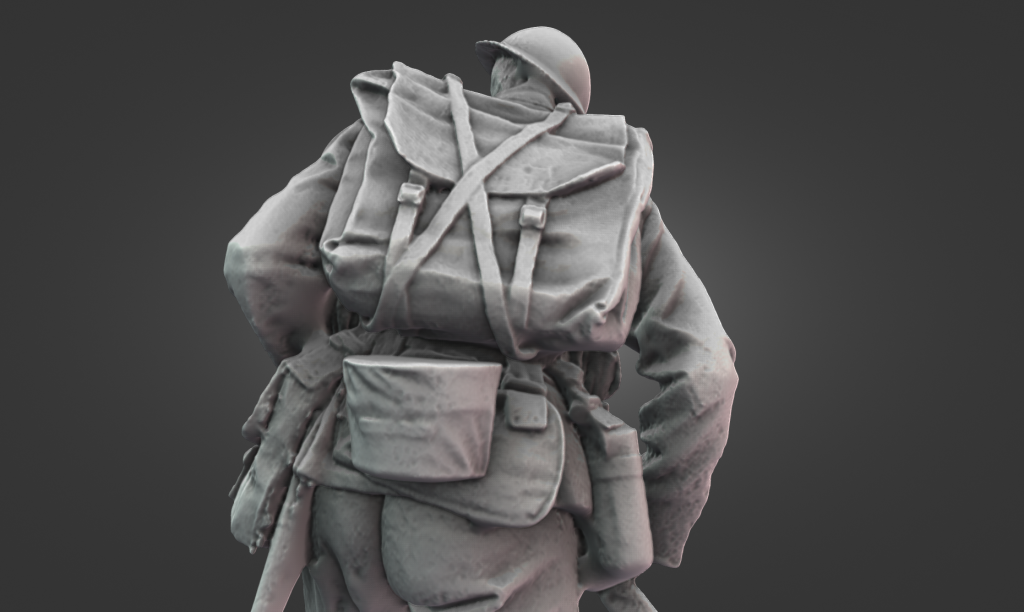
When you explore the historic business district of Liverpool, specifically around the stunning Exchange Flags, you will discover a profound piece of military and local history. Standing resolutely outside Walker House is the Liverpool Cotton Association War Memorial. As I continue my journey to digitally archive the most important public monuments in our city using my Creality Otter Lite 3D scanner, capturing this beautifully detailed bronze soldier was an absolute must.
Here is the compelling story behind this historic tribute and how advanced handheld 3D scanning technology makes digital preservation so simple.
The History Of The Cotton Association Memorial
Liverpool was once the global epicenter of the cotton trade, and the Cotton Association was a massive part of the city. When the First World War broke out, thousands of its members answered the call to serve.
Here are the key historical facts about this poignant monument:
- The Artist: The striking life size bronze was created by the noted British sculptor Francis Derwent Wood, who also did pioneering facial reconstruction work for wounded soldiers during the war.
- The Dedication: Out of the 2500 members of the Liverpool Cotton Association who enlisted, 358 tragically lost their lives. This monument was erected to ensure their sacrifice was never forgotten. It was officially unveiled on April 5 1922 by Field Marshal Earl Haig.
- The Design: The sculpture depicts a resolute British infantryman in full First World War uniform and equipment, advancing forward while holding his rifle across his chest. Interestingly, the rifle originally featured a bayonet, but it was lost to theft many decades ago and never replaced.
- The Relocations: The soldier has actually moved a few times! It originally stood proudly at the front colonnade of the Cotton Exchange Building on Old Hall Street. After the building was remodeled, it was moved to an inner courtyard. Finally, in late 2011 and into 2013, when the International Cotton Association relocated, they brought the soldier with them to his current prominent home at Exchange Flags.
Scanning Historic Bronze With The Creality Otter Lite
Digitizing a dark, weathered bronze statue right in the middle of a busy commercial square like Exchange Flags requires equipment that is fast, discreet, and highly accurate. The Creality Otter Lite handled the task perfectly.
Here is why this scanner excelled during the capture process:
- Incredible Precision: Capturing the intricate folds of the soldiers uniform, the webbing of his equipment, and the details of his rifle required serious accuracy. The 0.05 millimeter precision of the Otter Lite flawlessly mapped the complex textures of the historic bronze.
- No Messy Sprays: Because this is a deeply respected war memorial and a Grade II listed structure, applying dulling spray to the metal was completely out of the question. The advanced vision system handled the dark bronze beautifully in the natural outdoor lighting.
- Wireless Portability: Scanning in a bustling area surrounded by office workers and pedestrians means you need to be quick and avoid creating tripping hazards. The lightweight and entirely wireless design of the Otter Lite allowed me to walk smoothly around the stone pedestal and the statue, capturing every angle without any trailing cables.
A Digital Archive Of Local Sacrifice
Preserving our local war memorials in 3D allows us to capture the profound gratitude and history of our city. Having a flawless digital model of the Liverpool Cotton Association War Memorial ensures that the brave sacrifice of those 358 men, and the incredible sculptural work of Francis Derwent Wood, can be respected and remembered by future generations across the globe.