Heritage 3D Scanning with the Creality Sermoon P1
I recently took the new Creality Sermoon P1 out into the field. My goal was to run a comprehensive performance test on a large-scale civic monument. To be completely honest, the field capabilities of this scanner completely surprised me.
The raw mesh data quality is absolutely outstanding. Furthermore, the wide NIR (Near-Infrared) field of view made tracking a massive, intricate limestone structure significantly quicker and easier. Consequently, I almost feel like I’m cheating on my trusted Creality Otter!
This field test provided a perfect opportunity to digitally preserve an incredible piece of public art. Meanwhile, I also documented the fascinating local history behind it.
The Hidden History of Liverpool’s Metquarter Monument
Unveiled on June 15, 1924, this poignant war memorial was originally housed inside the magnificent central hall of Liverpool’s primary General Post Office building. This massive Victorian sorting facility was a hub of city life. However, it suffered catastrophic structural damage during the May Blitz of 1941. The bombing completely destroyed the upper floors of the building.
When developers eventually turned the historic site into the modern Metquarter shopping center on Victoria Street, teams carefully salvaged and preserved this vital piece of civic history. They relocated the monument to its current prominent position. Therefore, the public can still access it today. The monument stands as a permanent honor roll for the 156 members of the Liverpool post office staff who tragically fell during the Great War.
The Master Craftsmanship of George Herbert Tyson Smith
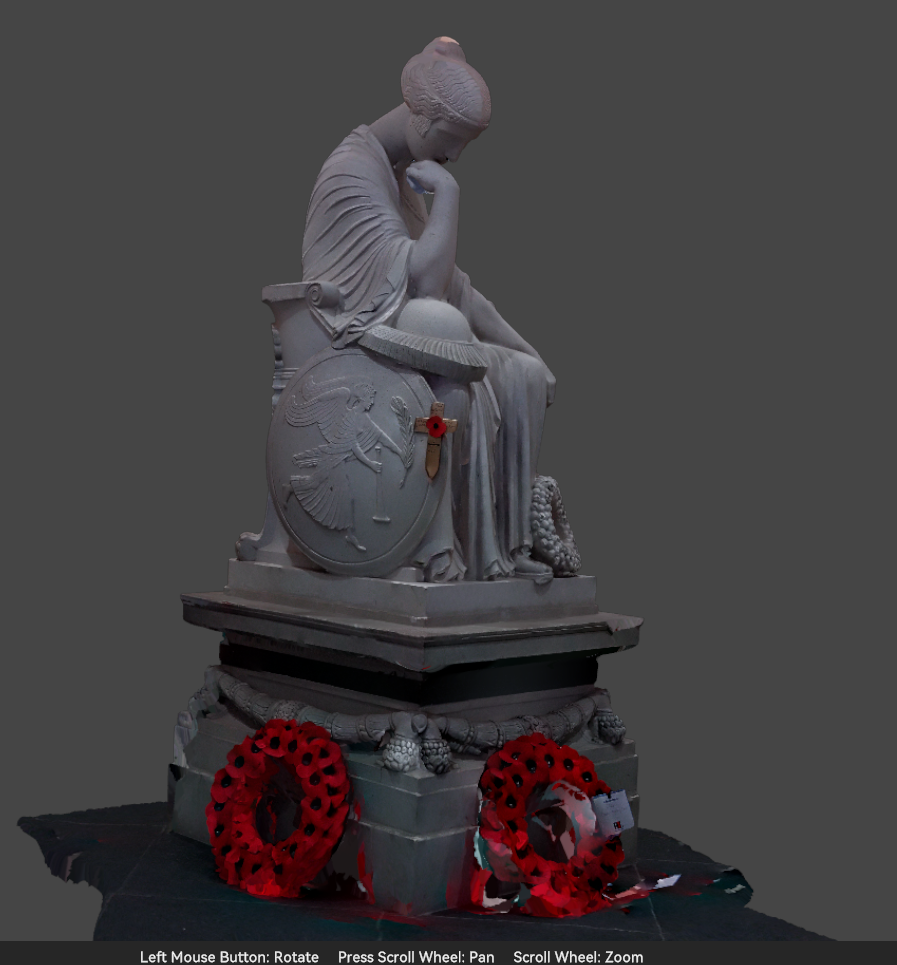
Capturing this specific monument allows us to preserve incredible, fine-carved details. Legendary Liverpool sculptor George Herbert Tyson Smith created this masterpiece. He is also famous for carving the iconic relief panels on the Liverpool Cenotaph at St George's Plateau.
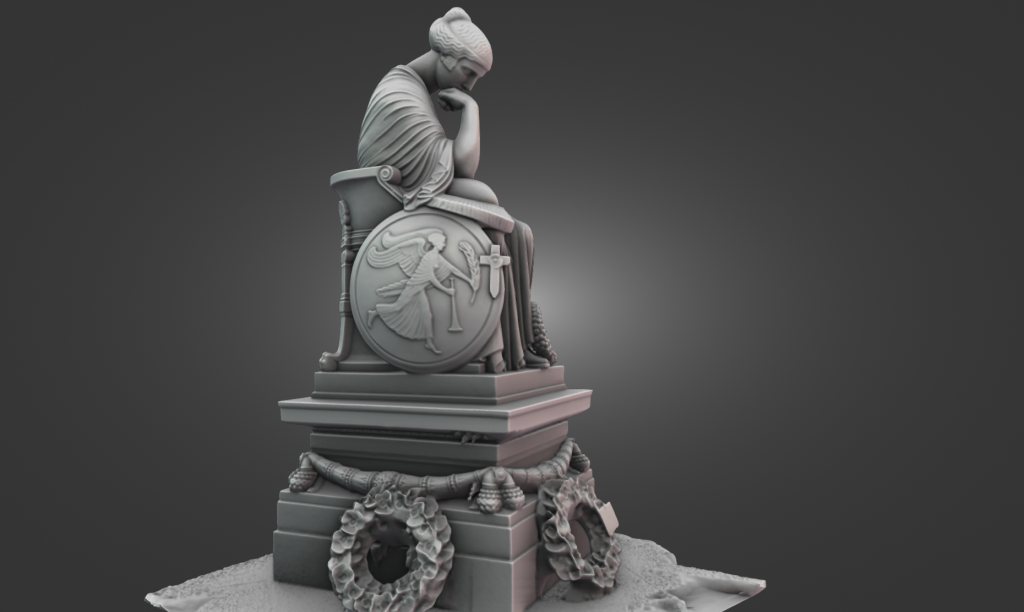
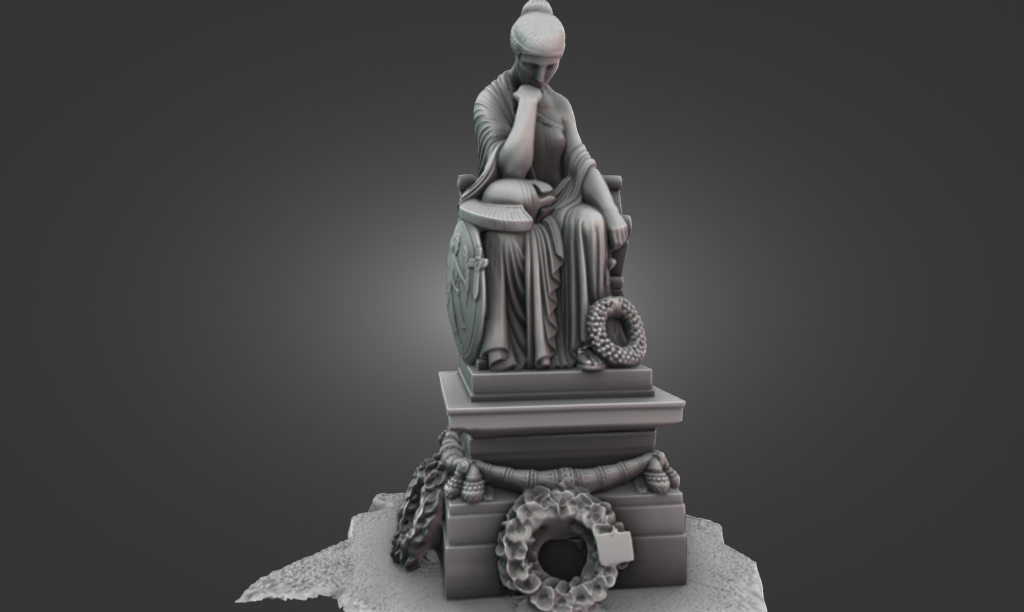
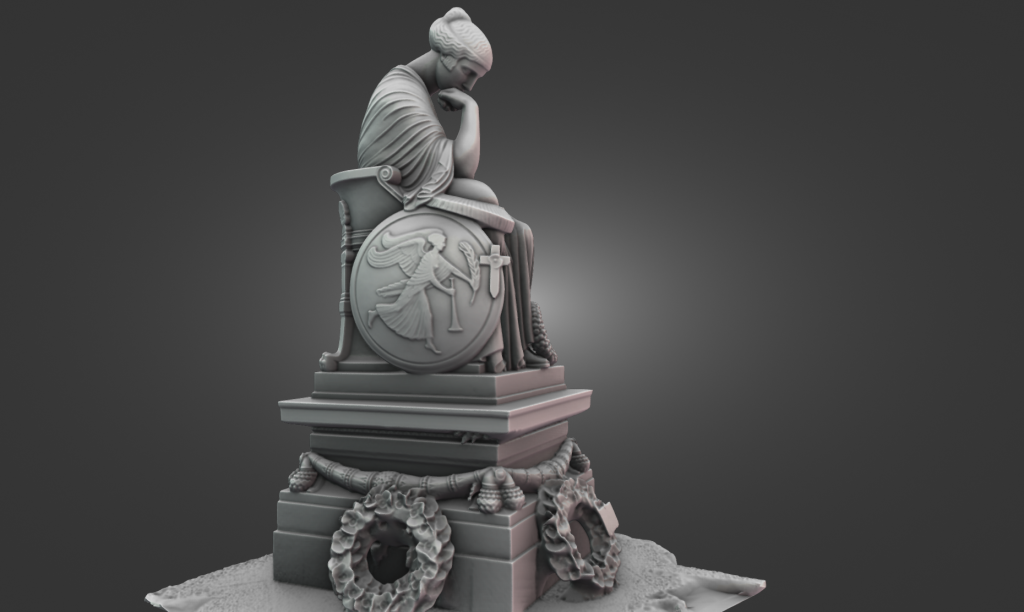
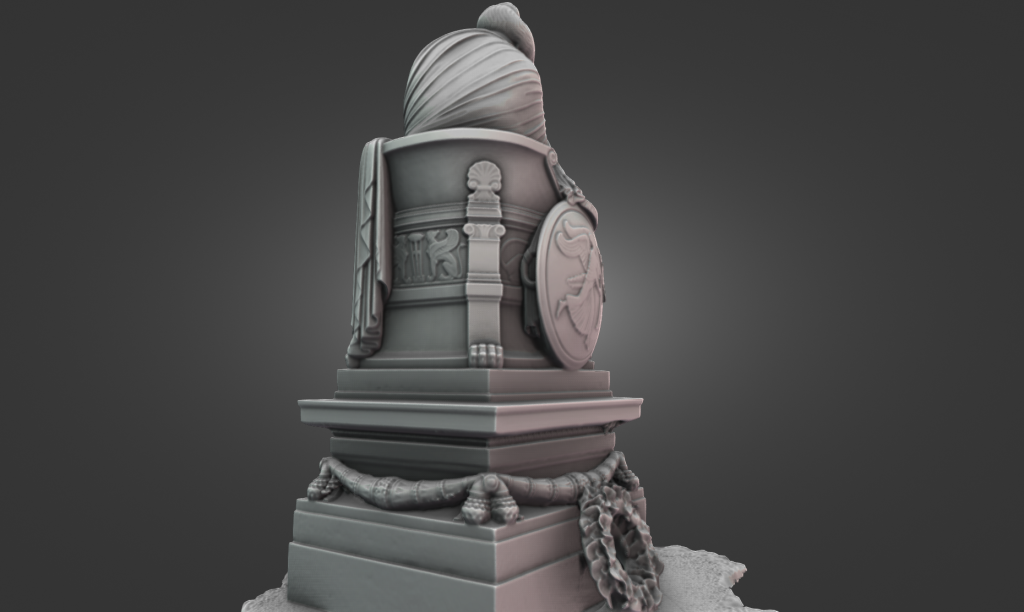
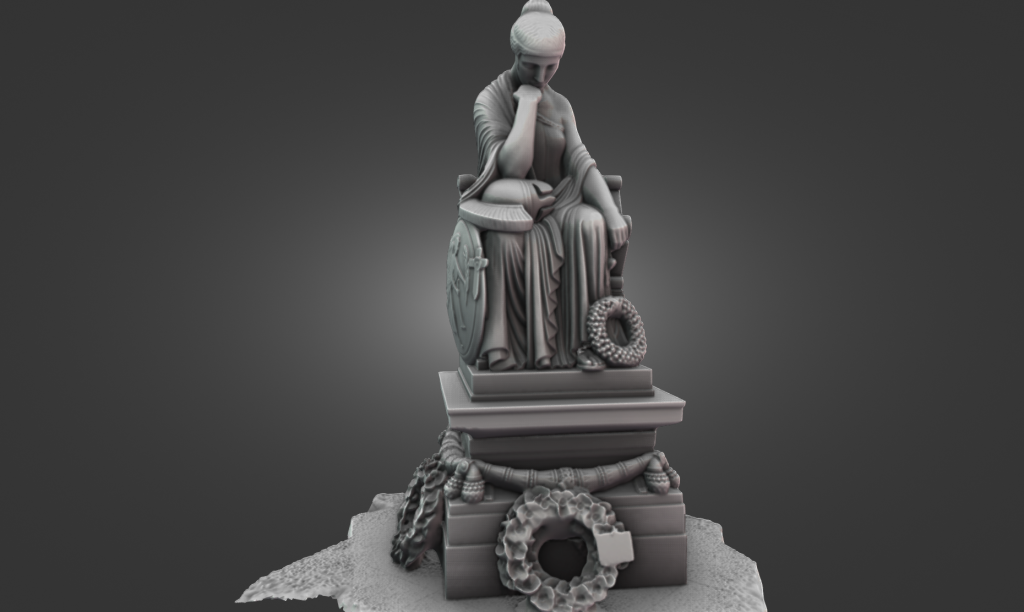
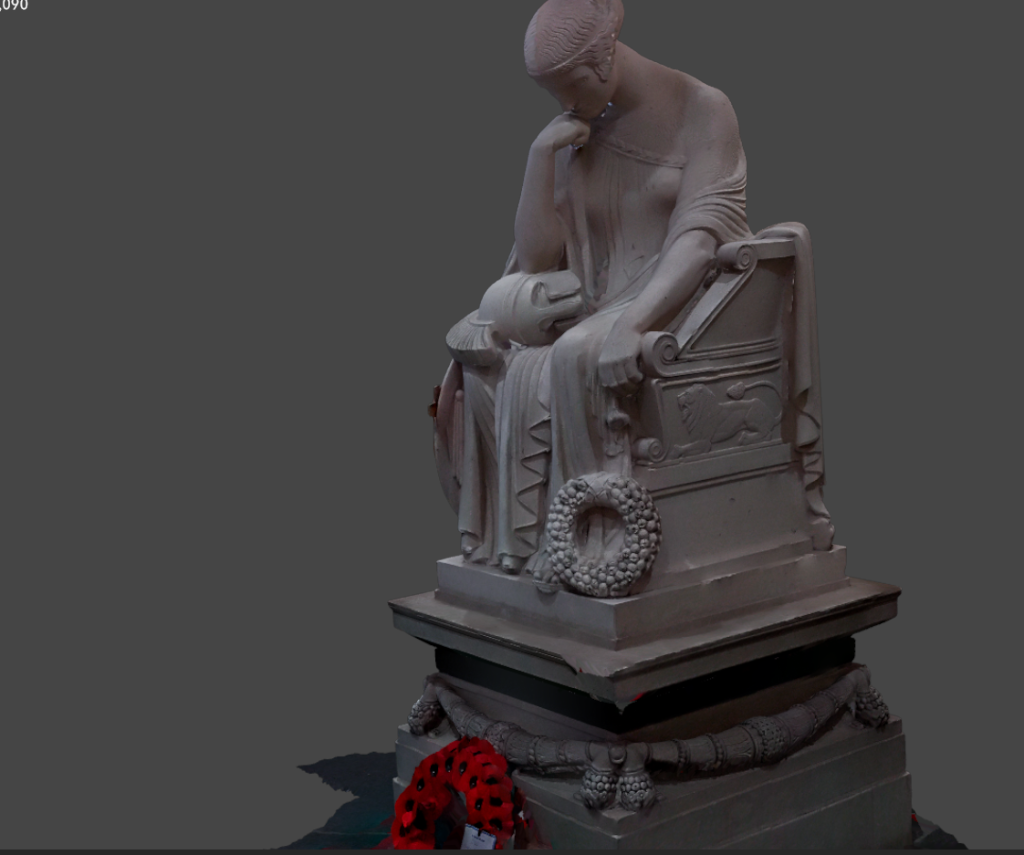
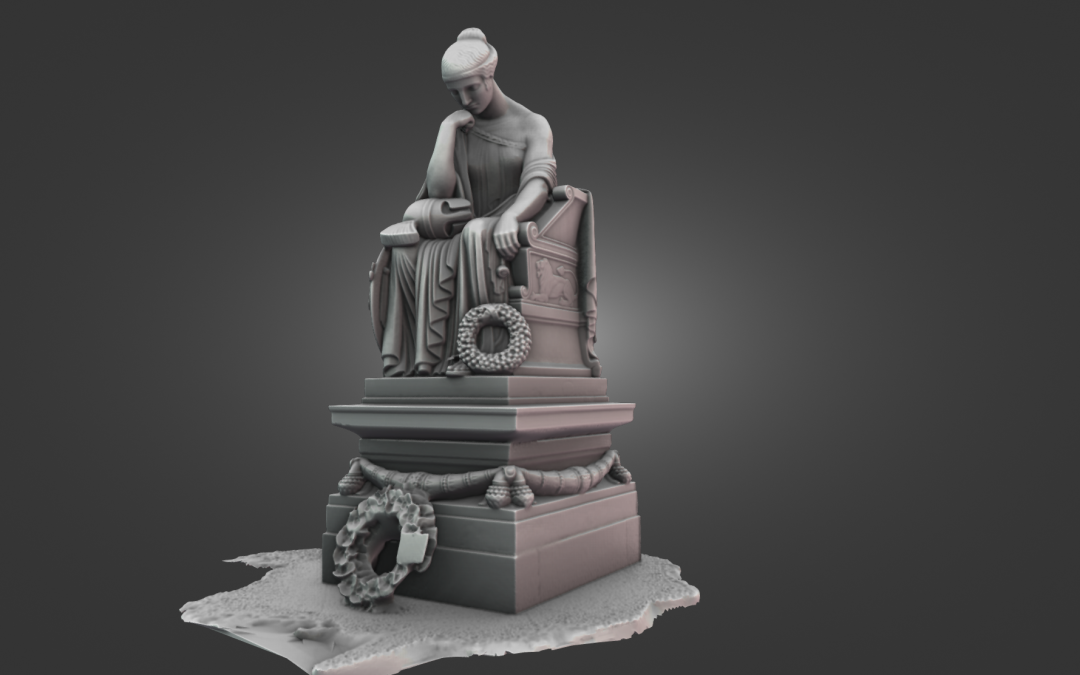
Our high-resolution 3D scan successfully archived the primary elements of Tyson Smith's design:
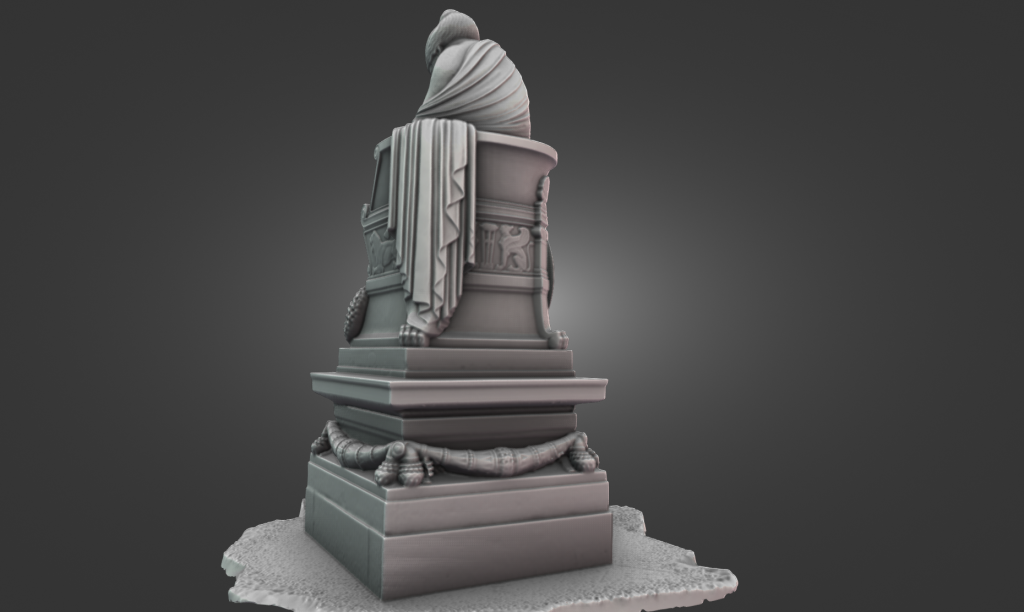
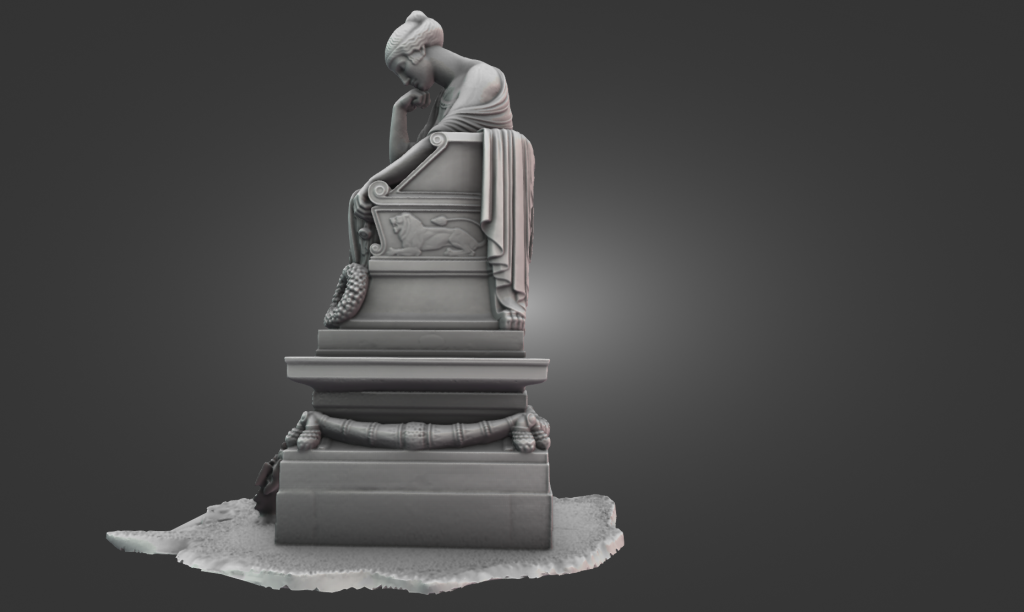
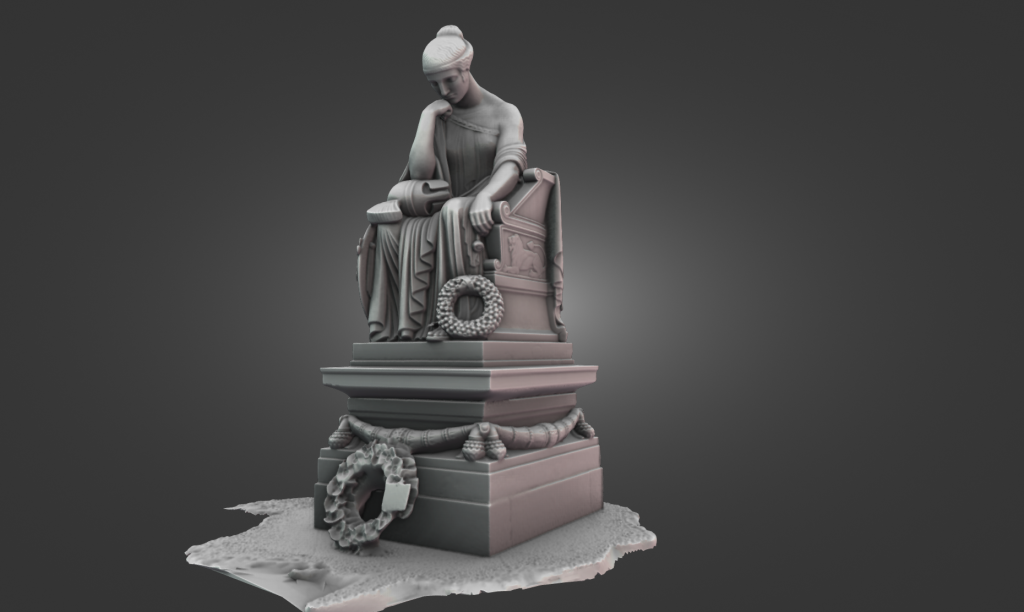
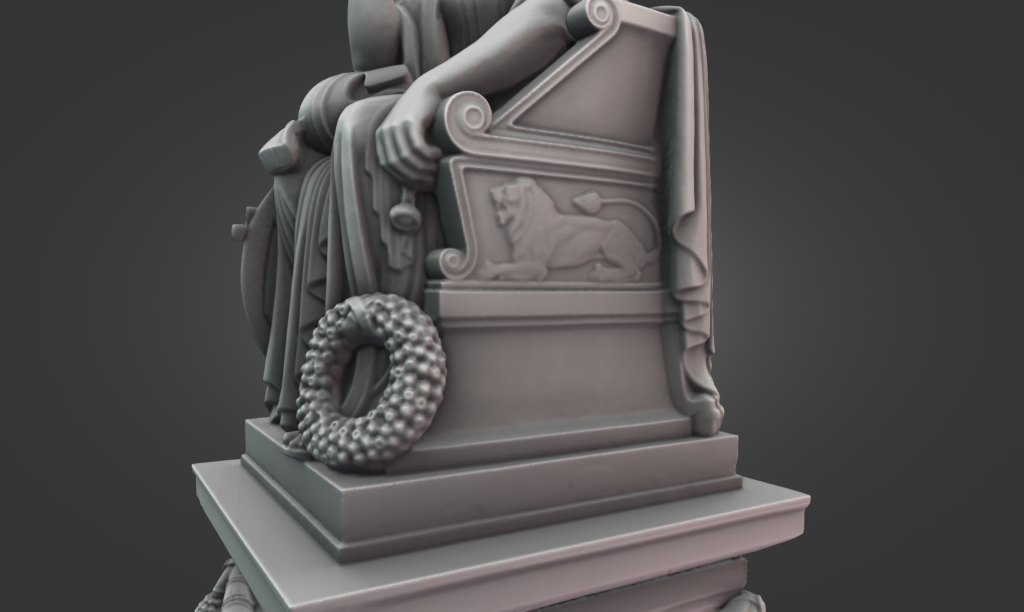
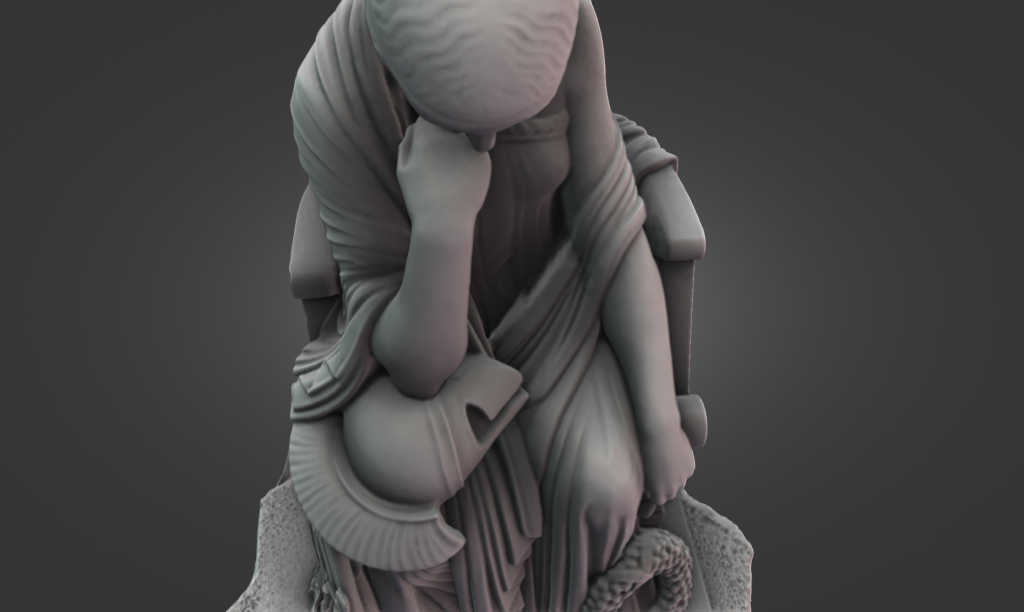
- The Mourning Figure: Sculptors carved this central figure from premium Échaillon limestone. It depicts a woman in classical Greek costume in a deeply contemplative, seated pose. This figure symbolizes Great Britain mourning her wartime dead. Her arm hangs low, holding a symbolic poppy over a detailed stone wreath at her feet.
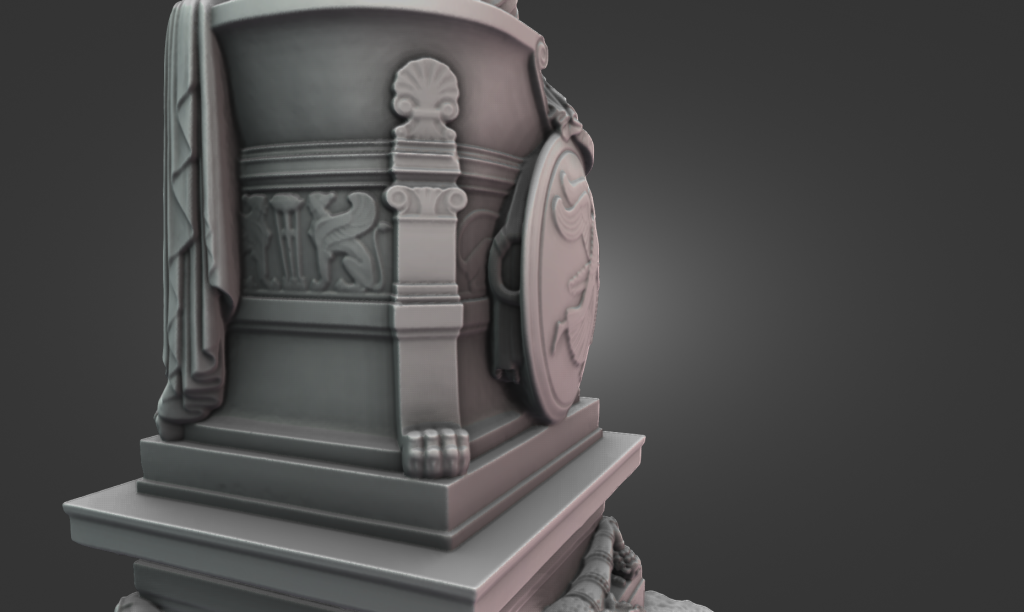
- The Intricate Plinth: Craftsmen built the heavy square base from rare green Westmorland stone. They decorated it with hand-carved garlands and highly unique architectural relief panels on each side.
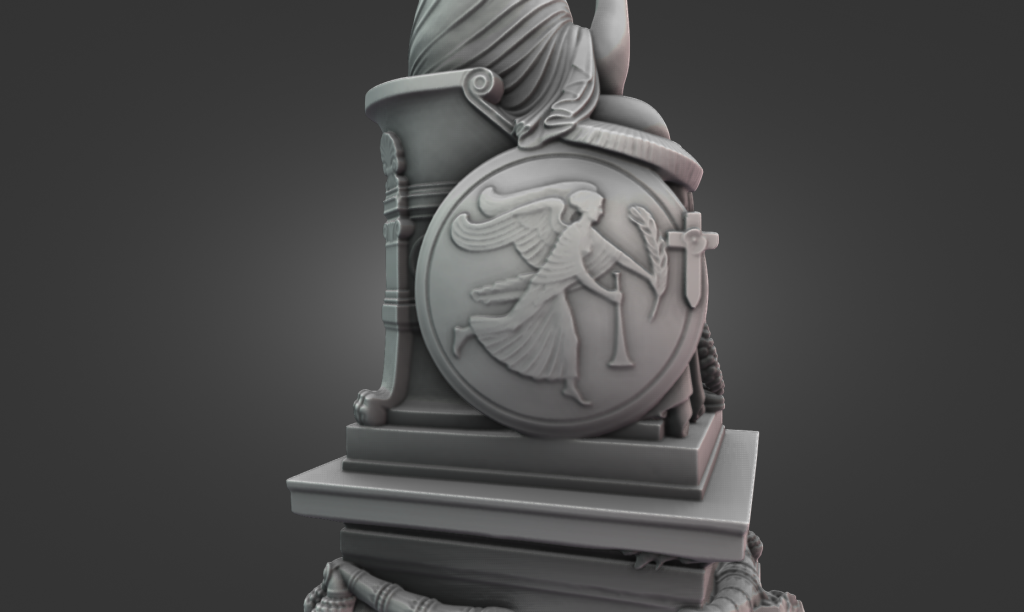
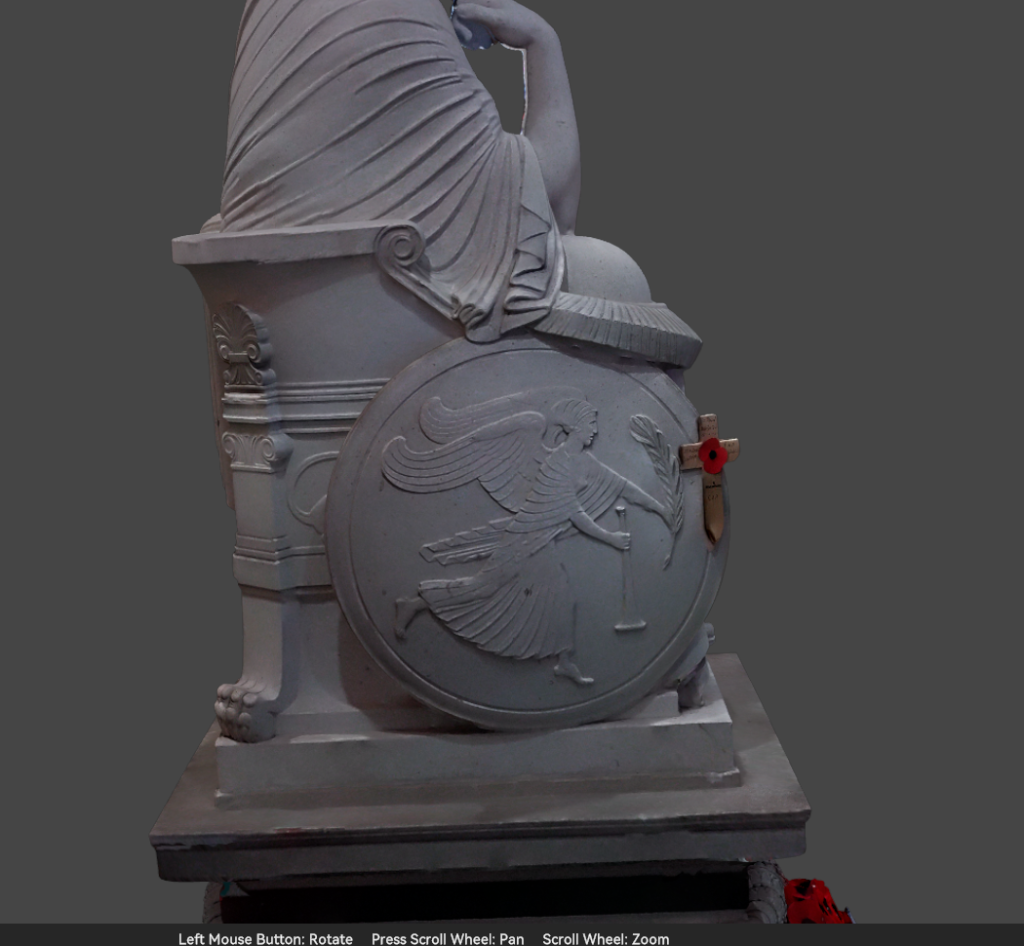
- The Symbolic Relief Panels: The sides feature a shield depicting Victory holding a trumpet and a palm branch. In addition, you can see a stylized British lion. The reverse panel displays two perfectly carved Egyptian sphinxes facing one another.
Creality Sermoon P1 Tech Insights
When handling heritage scanning, materials like aged Échaillon limestone and dark Westmorland stone can create data holes. This happens because the stone surfaces absorb or scatter scanner light.
However, testing the Creality Sermoon P1 on this monument highlighted a few major advantages for on-site archiving:
1. Superior NIR Tracking on Raw Stone
The Near-Infrared light technology handles the matte, porous texture of weathered limestone effortlessly. As a result, it captured the crisp edges of Tyson Smith's chisel marks cleanly. It did not require any scanning sprays or intrusive surface prep.
2. Wide Field of View (FoV) for Massive Structures
Scanning large public statues usually requires tedious stitching or moving at a snail's pace. Otherwise, you lose alignment. Fortunately, the wider field of view on the P1 means you can sweep across massive sections of the plinth quickly. This allows you to capture large geometric areas in a fraction of the time.
3. Preserving Geometry for the Future
By capturing this monument down to millimeter accuracy, we create a permanent digital twin. Therefore, even if the physical stone suffers from environmental wear or accidental damage, the exact geometry is safely archived for future generations. It remains ready for digital museum exhibits or high-fidelity 3D printing.